
Hypermobility & Fatigue after Exercise: Tips from a Physio
Fatigue is common in hypermobile disorders (HSD/hEDS) – often with pain & flare ups. Learning gentle, sustainable exercise skills can make movement feel more manageable.

last updated: July 2026
Strength training is important for everyone — but for people with hEDS or HSD, it can be life‑changing.
This guide shares safe, stabilisation‑focused physiotherapy ideas to help you build strength confidently, reduce flare ups and support your joints without overwhelming your energy.
Fatigue and joint instability can affect every part of daily life when you live with hEDS or HSD.
I’ve managed hypermobility pain and fatigue since my teens, moving through the boom‑and‑bust, crashes and flare ups cycles that many people experience. I’ve supported clients through these patterns too – and seen how deeply they impact confidence and wellbeing. Strength training isn’t a quick fix, but the right strategies can help you feel more stable, mobile and confident in your body and may reduce the impact of flare-ups.
I believe that everyone should have access to the health benefits of exercise, including strength training, even if fatigue, pain and complex conditions mean that modifications and adaptations are required. Its exceptionally rewarding when my clients achieve a movement – a deadlift, a squat or a plank perhaps – that they thought they’d never be able to do. I help people achieve their personal superhero moment, by supporting them through an adaptive, paced and carefully refined programme.

Disclaimer: This information is for general education only & isn’t a substitute for personalised medical advice, assessment or diagnosis. Symptoms like pain, fatigue & instability can have many possible causes, so it’s important to discuss any new, changing or concerning symptoms with a qualified healthcare professional.
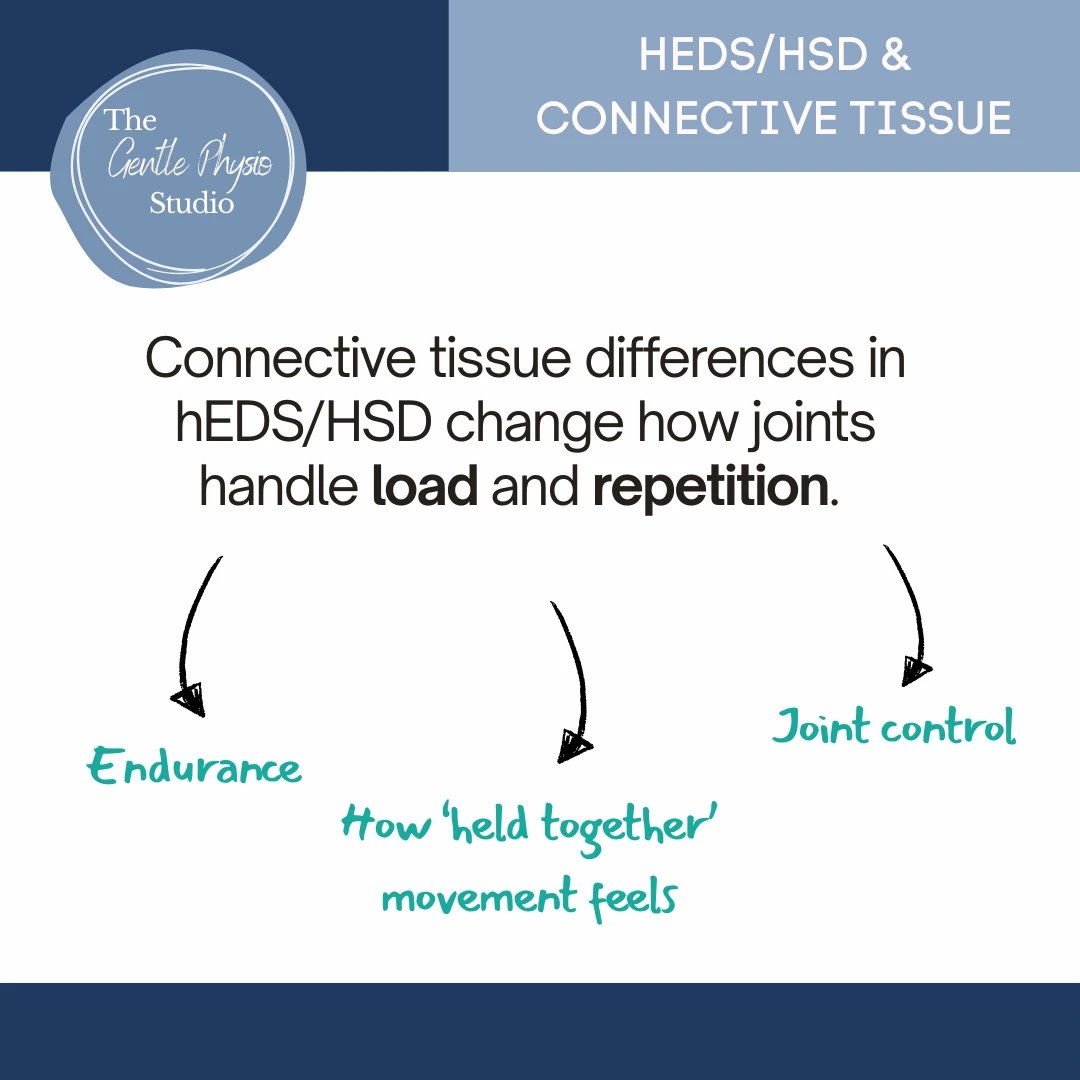
Joint instability in connective tissue disorders like hypermobile Ehlers Danlos (hEDS) and hypermobility spectrum disorder (HSD) can cause pain, dislocation, subluxing, sensations of instability or feeling ‘wobbly’, as well as fatigue during and after exercise.
This is thought to be caused by the increased elasticity and reduced recoil of connective tissue like tendons, ligaments and fascia, which hold joints together and attach muscles to bones. However, common features like deconditioning arising from reduced physical activity, poor proprioception, and a sensitised nervous system could also contribute to unsettling sensations during movement.
If you’re newer to hEDS or HSD and want a clearer picture of why your joints behave this way, my explainer on what hypermobility disorders actually are gives a really calm, physiotherapy-led overview.
There is sadly not much research (researchers can’t cover everything!) into interventions including strength training for hEDS/HSD, as highlighted in this 2022 article published in the Journal of Functional Morphology and Kinesiology. However, strength training has been found to increase strength, endurance and balance in wider populations – all factors which can be affected by hEDS/HSD. In my clinic, I’ve seen how strength training, when delivered in by a hEDS/HSD informed and fatigue-aware clinician, can help people with hEDS/HSD feels more stable, stronger and improve their functional capacity. Additionally, we do know that muscle strength CAN increase in the hEDS/HSD population, which is encouraging and reassuring!
People with hEDS/HSD and other chronic pain conditions are often, understandably, worried about injuring themselves or over-doing it and triggering a flare-up. In the next section, we talk about some strategies which help you explore safely.
For people with hEDS/HSD or other conditions which involve chronic pain and fatigue, the approach taken in traditional strength training may well not be suitable. The ‘one rep max’ involves lifting the heaviest possible weight you can – so heavy you can only do one rep. This is used to calculate the weights people should train with (often 40%).
However, for people with chronic pain and joint instability, this method obviously has significant risks of causing injury or flare-up and shouldn’t be used. But its OK – there are other approaches!
If you’re still figuring out which types of movement feel safest for your body, my guide on the best types of exercise for hypermobile people breaks down Pilates, yoga, strength work and cardio in a really gentle, practical way.
RELATED ARTICLE → Chronic Pain & Movement Avoidance: How Can I Exercise Safely?
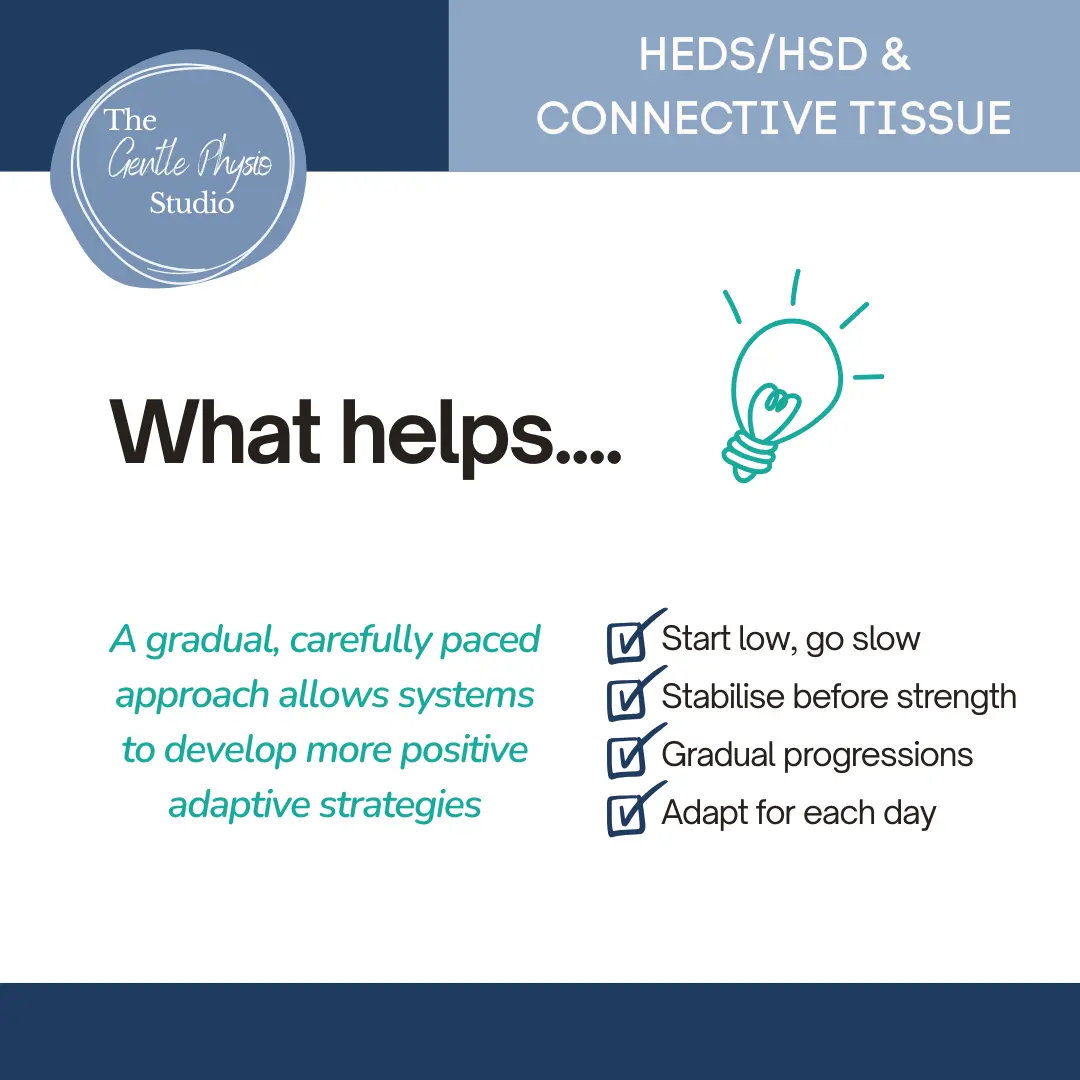
Even if your ultimate goal is to lift free weights, you might not start with them. For people who are deconditioned, and find pain, fatigue and other symptoms are easily provoked, its best to start with foundation movements which don’t flare you up and improve your trunk stability (core, back, shoulders & pelvic) and help you develop good coordination moving your limbs and knowing where they are in space.
As a ballpark figure, you could aim at being able to do 20 minutes of moderate level exertion (with rests on top) without setting off flare-ups before adding ‘resistance’.
I often start people with foundation Pilates or yoga movements to help them develop body awareness so they have a good understanding of what movement feels like, before adding closed kinetic chain (uh-oh, more fitness geek terms) body weight exercises which develop strength.
If you are feel unsure how to move safely – or you find that you’ve started to avoid certain movements – my guide on chronic pain and movement avoidance explains why this happens and how to rebuild confidence gently.
Closed Kinetic Chain
This is just where the resistance is fixed (like the floor or a wall) and the hand/foot/limb stays still on it, while other joints move.
Imagine kneeling on all fours and doing a mini press-up – the hands and knees stay fixed. Compare it to a bicep curl – where the hand moves. The bicep curl is inherently less stable as hand can move freely, whereas the kneeling on all fours is more stable, as the hands and knees are fixed. This means there is less chance of feeling wobbly or instability contributing to injury/flare-up.
This is a fitness geek term which is used to refer to anything which muscles need to work against in order to produce movement.
So just lifting your arm up isn’t ‘resistance’ training – but if you are
your muscles are having to work against an external force to move your arm. This causes the muscles to contract more strongly and its this process which triggers the fibres to modify and adapt so they can manage the demand – which essentially involves making the muscle stronger.
There are some other things involved as well – neuromuscular control develops, which is when the nerves between the limb, spine and brain grow more connections and a stronger pathway which increases the efficacy of your muscle contraction. Your bones get stronger too!
Resistance doesn’t have to mean heavy weights — it simply means adding any external force that your muscles must work against.
RELATED ARTICLE → Hypermobility & Fatigue after Exercise: Tips from a Physio
When you feel ready, start without weights or resistance. This means your body gets used to the range of movement, it gives you a chance to assess for instability BEFORE adding a weight, and gives you confidence in your capacity.
Explainer: DOMS – Delayed Onset Muscle Soreness.
This is the normal ache that people get after working out, which typically resolves after 48 hours. It should be tolerable, not affect your daily activities and not reach flare-up levels of distress. You would be able to train again after 2-3 days. This type of discomfort is ‘OK’ as long is it doesn’t get in the way of living your life. If it does, it means you overdid it, and need to reduce your reps/weight or another variable.
RELATED ARTICLE → Chronic Pain & Movement Avoidance: How Can I Exercise Safely?
While all of the above helps minimise the risk, you don’t have a crystal ball and can’t tell the future. Some other factor (illness, stress, injury, hormones) might mean all of your careful pacing still ends in a flare-up.
Sometimes, you’ll have a good sense of whether the workout causes it, or whether it was another factor. Other times, the cause is a total mystery, or remember – flare ups can happen randomly, for no cause – as well.
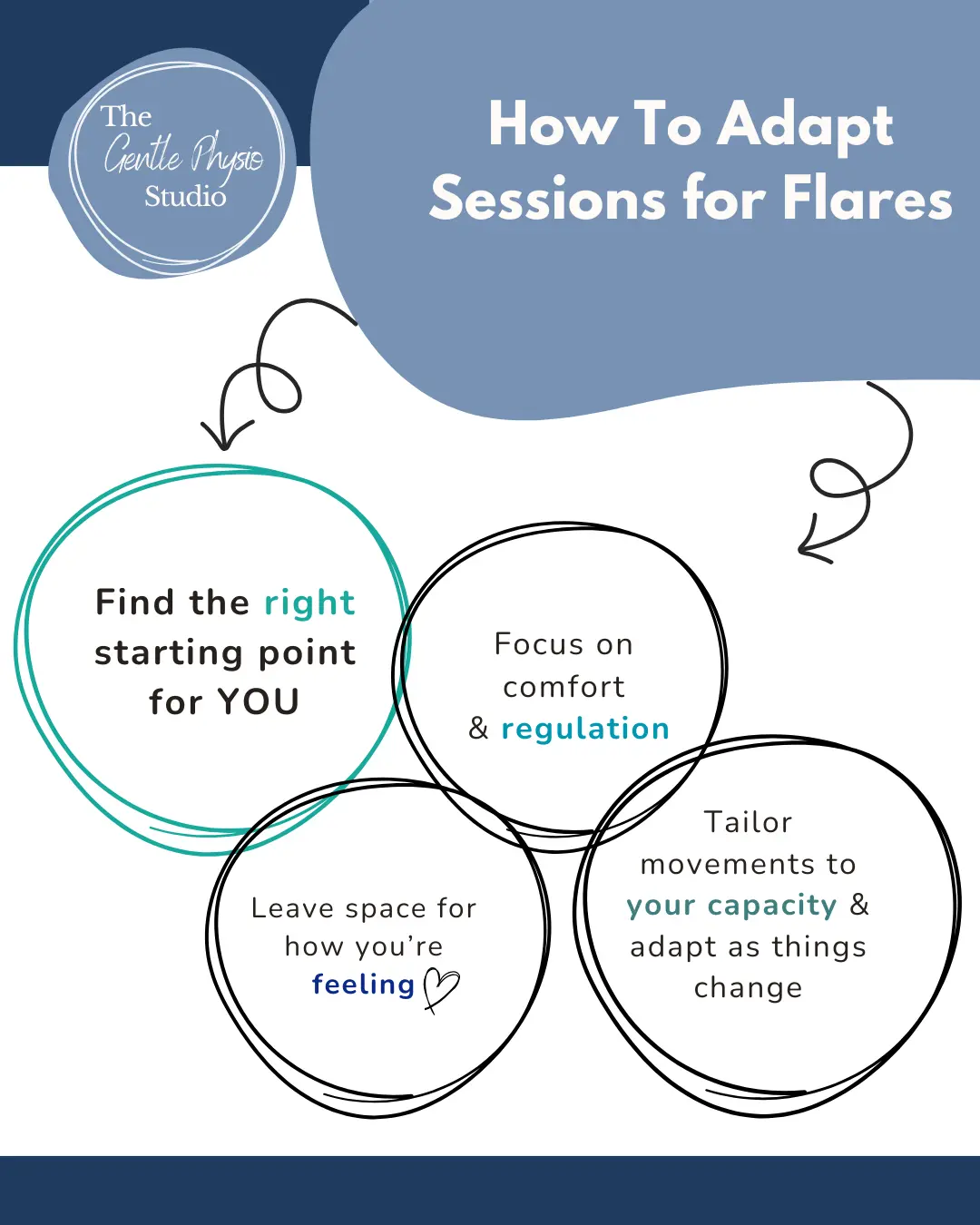
During a flare, depending on your capacity, you will likely need to return to a much lower level workout, just gentle mobility movements – or it might just be a sofa day, and time to focus on comfort and regulation.
Once you are feeling better, do not go straight back to the workout that you did before your flareup. Its advisable to gradually build back up.
Ideally you’ll have identified your reliable baseline and you’ll have a safe starting point to return to that you know your body tolerates well – I’m hoping to write more about doing that in the near future.
The longer, and more severe the flare-up, the more you’ll have to step back. These are suggestions which will have to be modified for your circumstances, but to give you a rough idea:
Once you can do repeat without causing a flare-up for about 3 sessions, you can think about gradually increasing towards your previous workout, but remember the principles from section 4.
And if you often feel wiped out or flare after activity, my guide on fatigue and PEM in hypermobility explains why this happens and how to pace strength work so your body can actually recover.
Be Kind To Yourself
I often complain to my husband ‘I don’t know why I’m so tired!’….. and then seconds later, can’t help but laugh at myself as I point out ‘Oh yeah, its probably the chronic fatigue’. Flares don’t always have an obvious cause, though tracking can help identify some of them. I still don’t always catch them in time, or mess up my pacing. Real life is messy, so all we can do is be kind to ourselves.
RELATED ARTICLE →What Are Hypermobility Disorders? A Physio Explains hEDS/HSD
If you are struggling with pain, fatigue, joint instability and don’t know where to start – or maybe you’ve tried some things and they just haven’t worked for you – a specialist physio can provide expert advise on where to start and how to progress, based on your goals.
I combine elements of joint specific rehab, Clinical Pilates, Therapeutic Yoga and strength training to create a personalised rehab plan taking into account the impact of chronic health conditions like hEDS/HSD.

Fatigue is common in hypermobile disorders (HSD/hEDS) – often with pain & flare ups. Learning gentle, sustainable exercise skills can make movement feel more manageable.
Strength training can feel overwhelming with hEDS or HSD — especially with pain, fatigue or fear of flare ups. This guide shares safe, stabilisation focused physiotherapy ideas to help you build strength confidently, reduce injury risk and stay within your energy envelope.
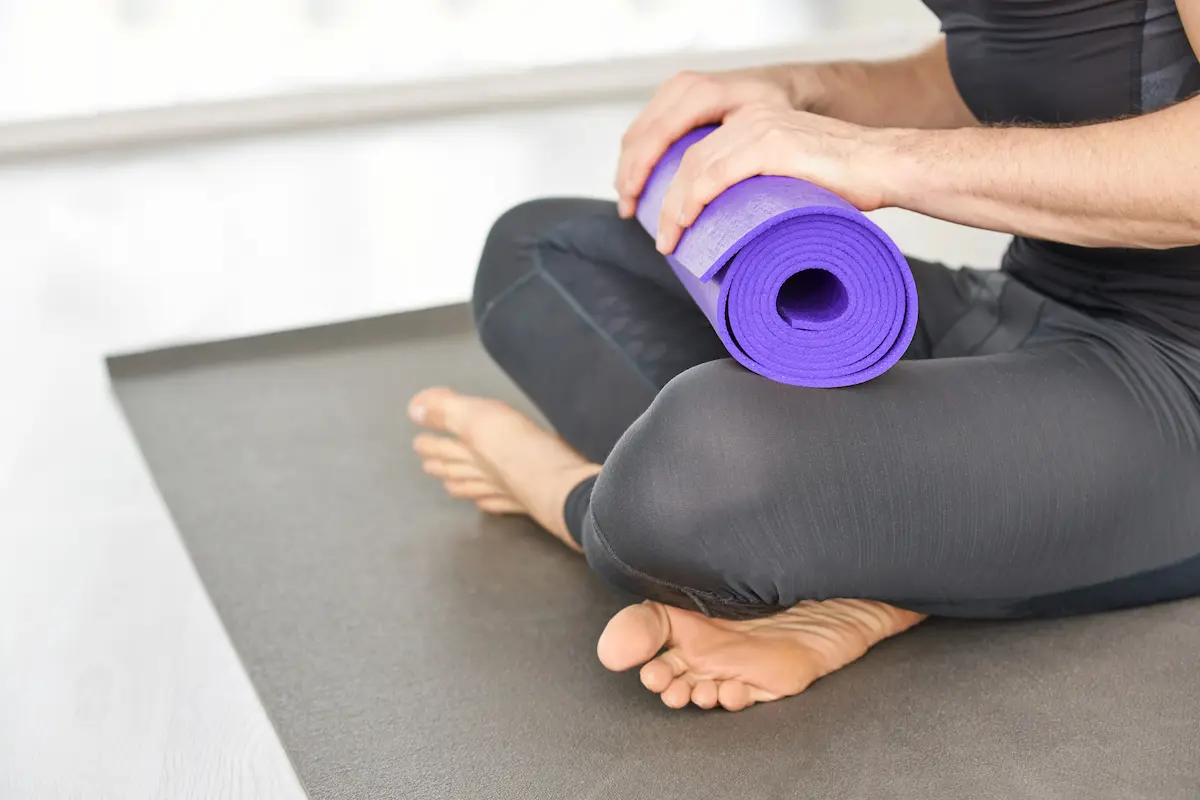
Finding the right exercises with hEDS or HSD can feel overwhelming when pain, fatigue or joint instability get in the way. This guide explores some of the best types of exercise for people with hypermobility disorders — and explains how each one supports stability, confidence and day to day function without overwhelming your energy.
Hollie is a UK Physiotherapist specialising in hypermobility disorders, chronic pain, fatigue, autonomic symptoms and neurodivergence‑informed rehab. She works remotely across the UK, offering calm, paced physiotherapy for people whose symptoms fluctuate day‑to‑day.
Her approach blends clinical training with lived experience of hEDS, chronic pain, fatigue, instability and endometriosis, giving her a deep understanding of boom‑and‑bust cycles, flare‑ups and the fear of making symptoms worse.
Hollie has spent 15 years teaching movement (Clinical Pilates, Therapeutic Yoga, Shaw Method swimming and Aquatic Therapy), helping people rebuild confidence in movement.
You can learn more about her background and clinical approach on the About Me page.

If this guide resonated with you, you might like to find out more about how I support people with chronic pain, fatigue and hypermobility here are some useful next steps:
If you are ready to get started, you can book a remote initial assessment with me – a 45 minute session designed to understand your symptoms, your goals, and how we can get there.
Introductory offer: £26 £45
If you’d like to get a sense of who I am and how I work, you can read more about my background, my approach, and the values that shape every session. I support people with chronic pain, fatigue and hypermobility using a calm, paced, and collaborative style – so you always know what to expect.
If you’d like to see what this work can look like in real life, you can read the stories of people I’ve supported. I’m incredibly proud of what they’ve achieved, not because of big dramatic changes, but because of the steady, brave steps they’ve taken in their own bodies.