
Hypermobility & Fatigue after Exercise: Tips from a Physio
Fatigue is common in hypermobile disorders (HSD/hEDS) – often with pain & flare ups. Learning gentle, sustainable exercise skills can make movement feel more manageable.

last updated: July 2026
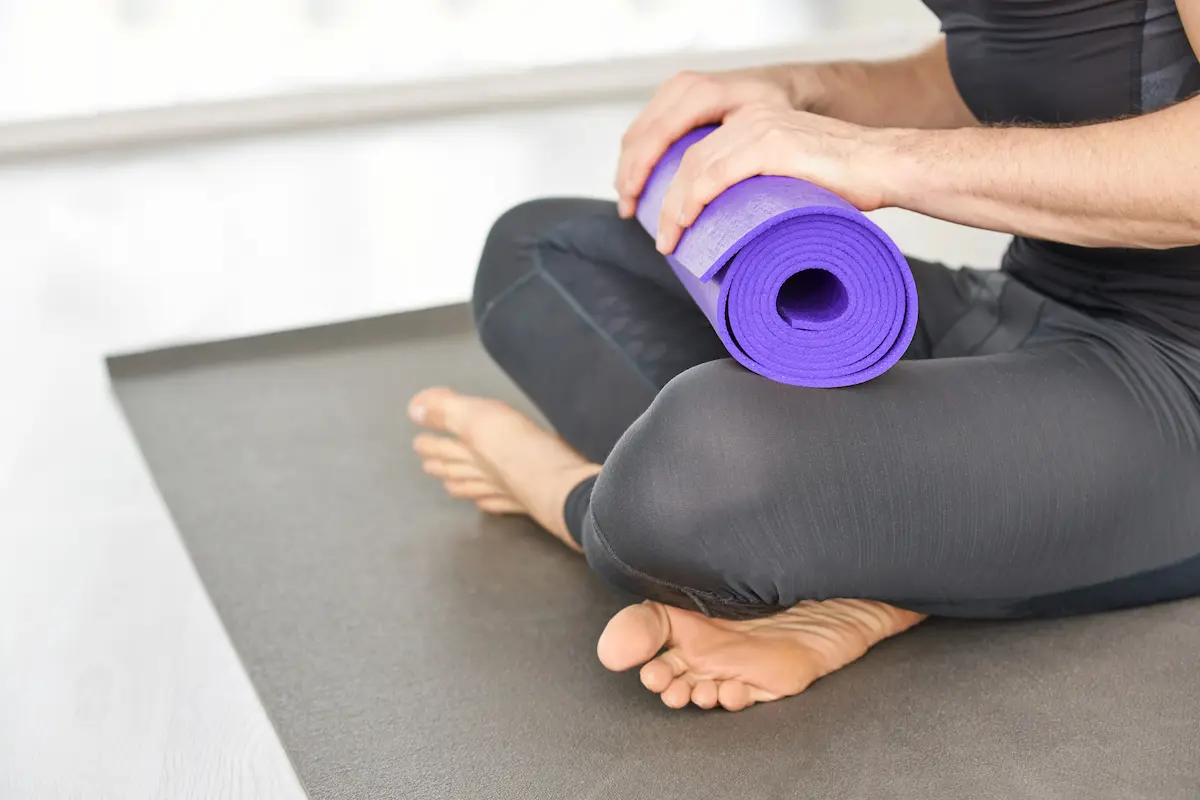
Finding the right exercises with hEDS or HSD can feel overwhelming when pain, fatigue or joint instability get in the way. This guide explores some of the best types of exercise for people with hypermobility disorders and explains how each one supports stability, confidence and day‑to‑day function without overwhelming your energy.
If movement currently feels unsafe or unpredictable, my guide on chronic pain and movement avoidance explains why this happens and offers gentle ways to rebuild confidence before you explore new types of exercise.
In my teens and early twenties, I struggled with pain and fatigue flare ups after levels of activity that everyone else around me seemed to manage with ease. My knees, back and shoulders were particularly difficult, and over time I started avoiding exercise altogether – which, unsurprisingly, made day‑to‑day tasks even harder as I became more deconditioned.
Age 20, I was incredibly lucky to work 1:1 with an empathetic Pilates teacher who started me at an extremely low level and supported me through flare ups and pain spikes. As my capacity grew, I added Shaw Method swimming, worked with a physio for gentle strength training, and eventually found myself doing press‑ups and weighted squats. Later, I added Iyengar Yoga for control, regulation and – honestly – the pure joy of movement feeling good again.
My pain didn’t disappear, but it improved significantly. I even reached a point where running became possible! Fatigue is still a battleground, but now my body has the strength to lift, reach, push and pull – which makes everyday tasks, from carrying a bag of compost to emptying the dishwasher, feel more manageable and use fewer spoons.

Disclaimer: This information is for general education only & isn’t a substitute for personalised medical advice, assessment or diagnosis. Symptoms like pain, fatigue & instability can have many possible causes, so it’s important to discuss any new, changing or concerning symptoms with a qualified healthcare professional.
Hypermobility disorders, including hypermobile Ehlers Danlos (hEDS) and hypermobility spectrum disorder (HSD), sometimes called joint hypermobility syndrome – affect connective tissue, making it more elastic with less recoil, which can affect joint stability. Dislocations and subluxation are common, but people often experience other symptoms like chronic pain, fatigue, dizziness on standing (orthostatic intolerance or POTS), gastrointestinal or cardiovascular symptoms.
People with hEDS/HSD often struggle with activity, exertion and exercise as it tends to flare-up their symptoms – known as exercise intolerance, delayed fatigue or post-exertional malaise. This means a different approach to exercise is required – one that accommodates fatigue and doesn’t flare up pain. Because of this, the type of exercise you choose matters just as much as the technique.
In this guide, we’ll explore some different types of exercise – Pilates, yoga, strength training and cardio and explain what each one offers, how it supports hypermobile bodies, and what to be careful of so you can move safely and confidently.
If you’d like a clearer picture of what’s happening in your connective tissue, my guide exploring what hypermobility disorders actually are gives a calm, physiotherapy‑led overview.
RELATED ARTICLE → What Are Hypermobility Disorders? A Physio Explains hEDS/HSD
Pilates can be an effective early‑stage exercise option for hypermobile people because it focuses on motor control and proprioception. A 2026 study in the Journal of Multidisciplinary Healthcare showed that an 8 week online Pilates programme reduced the impact of pain and fatigue, as well as reducing ‘kinesiophobia’ (fear of movement – common in people with chronic pain conditions).
Benefits include: • improved joint control • better proprioception • reduced fear of movement • safe, predictable structure • gentle strength without overload
What to be careful of: • overly flexible instructors encouraging end‑range movement • gripping or bracing instead of controlled activation • fast transitions that reduce stability • advanced exercises too early (e.g., roll‑ups, teasers)
Pilates helps you build the foundations you need before progressing to heavier or more complex exercises. As a Physio and Clinical Pilates Teacher, I’m able to modify and weave together right exercises for your body to manage pain and fatigue.
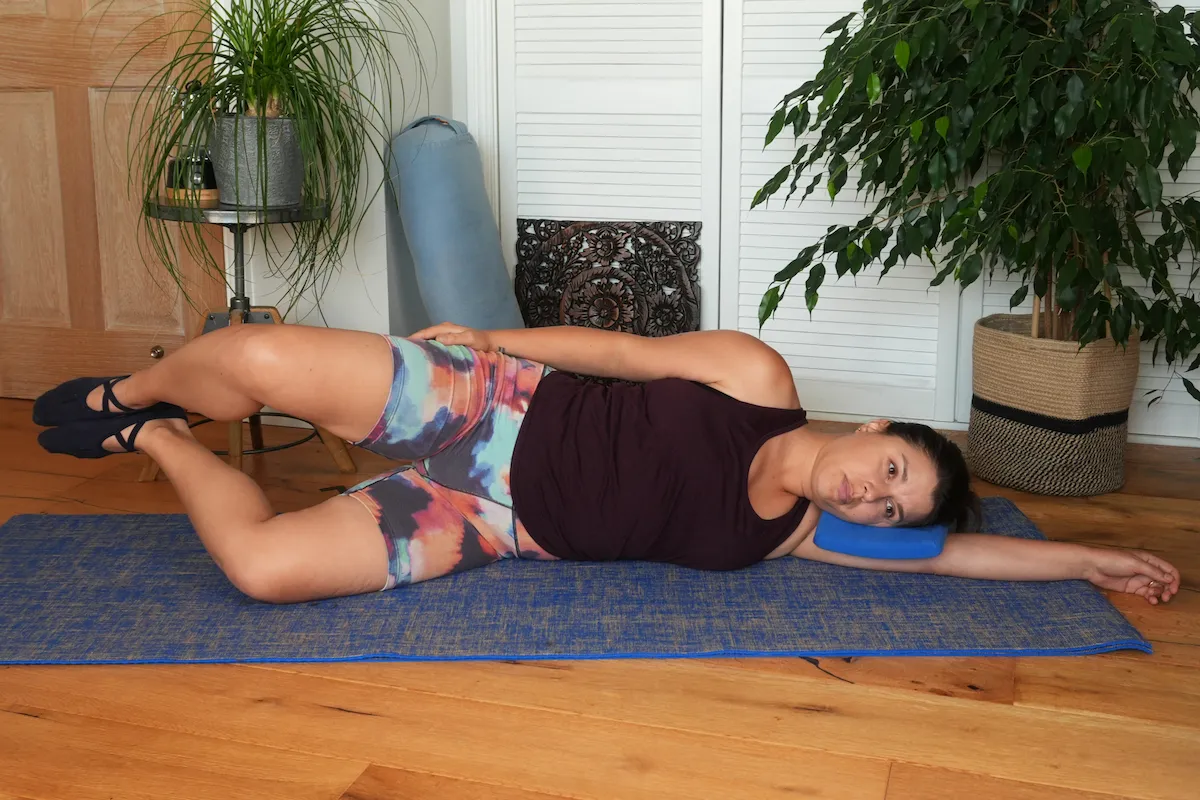
RELATED ARTICLE > Hypermobility & Fatigue after Exercise: Tips from a Physio
There aren’t any clinical trials which investigate the impact of yoga on people with hypermobility disorders (unfortunately researchers can’t cover every topic) but this review of biomechanical studies in the International Journal of Yoga and Physiotherapy shows that yoga can improve balance, muscle activation & muscle stabilisation – all of which are helpful to the hypermobile person.
Yoga can be helpful for hypermobility – when taught by an hEDS/HSD aware teacher. Some poses should be performed differently, so be sure to check with your teacher that they are able to guide you on that. Big group classes especially may not be suitable for those with hypermobility disorders, as there will be limited 1:1 modification, and the pressure to perform can push people towards movements which are beyond their capacity.
Try to ignore the photos of insta-friendly extreme yoga poses with backbends in the sunset or pretzel style poses – we’re looking to start in stable and strong positions to build up control, and progress from there.
What to be careful of: • end‑range stretching • passive hanging in joints • hyperextended elbows or knees • fast transitions without control
When modified well, yoga helps balance muscle flexibility against joint laxity. Having trained in Therapeutic Yoga teaching, I am able to help you chose the right starting point and progressions, often combined with elements of Pilates and Strength Training to work towards your goals.
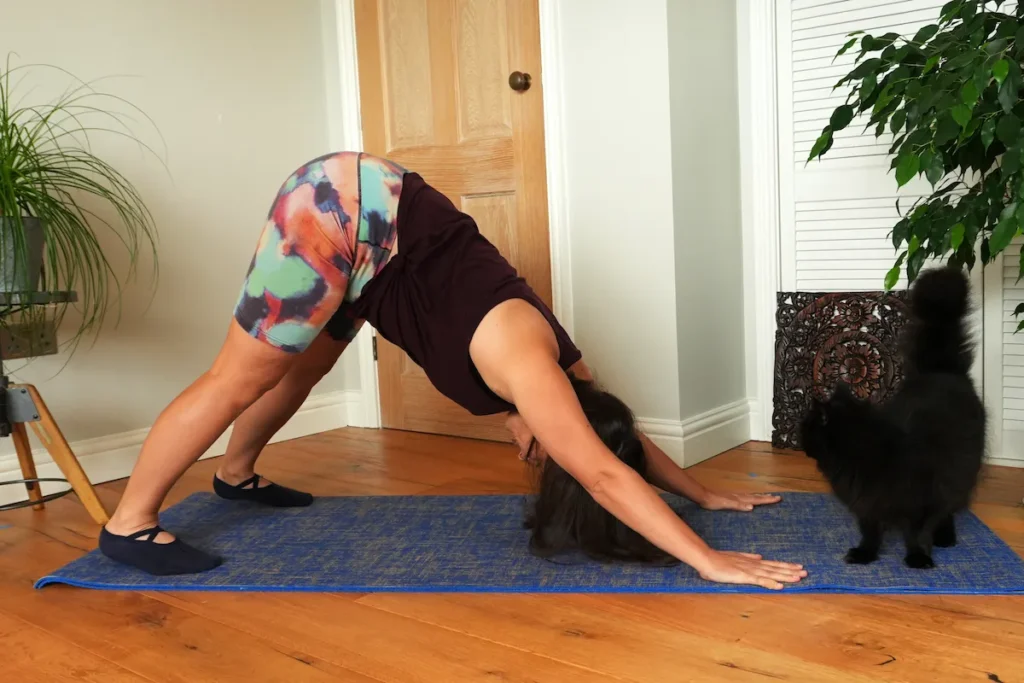
RELATED ARTICLE → Chronic Pain & Movement Avoidance: How Can I Exercise Safely?
Strength training is beneficial for everyone – but for people with hEDS or HSD, it’s especially important as they can have impaired muscle strength compared to those without a hypermobility disorder. Some of this may be down to poor proprioception – it can be hard to tell the cause when researching this. There are multiple research studies which report positive outcomes for strength training – this review by H. Zabriskie gives a good summary.
Stronger muscles are thought to provide the stability your connective tissue can’t, while resistance training can improve proprioception as well. Encouragingly, it was found that strength is gained at a similar rate for people with hypermobility disorders, as for those without, when exercising! So improvements to strength can absolutely be achieved.
It is important to ensure your body has enough stability and control to maintain good form through the whole exercise before adding weights or resistance. Starting with Pilates can help you develop a solid base and then practising the movement without resistance/weight means you can be sure your body is capable of the movement. Starting with a very light resistance/weight and gradually increasing the workload will make sure you are working within your body’s capacity.
If you’re starting to build stability and want to understand how to progress into strength work safely, my guide exploring strength training for hypermobile people explains how to use stability, joint control and gentle progression without triggering flare‑ups.
Benefits include: • reduced pain • improved joint stability • better movement confidence • improved day‑to‑day function
What to be careful of: • lifting too heavy too soon • end‑range loading (e.g., locking knees at the top of a squat) • high‑impact or ballistic movements • poor pacing leading to delayed fatigue or crashes
Strength training can help the body protect itself against the challenges of being hypermobile, and make daily activities feel easier. I am a huge fan of building up to strength work with clients, and I love the smile on their faces when they have the stability, strength and confidence to plank, squat or deadlift – movements which seemed impossible to them at the start of our work together.
RELATED ARTICLE → Physio Ideas for Safe Strength Training with Hypermobile Ehlers Danlos
Cardio can understandably feel intimidating when you live with fatigue, PEM like symptoms or autonomic dysfunction – so much so, its largely absent from research. Common high intensity cardio-type exercises such as running, HIIT workouts, spin classes, can easily aggravate pain and fatigue and are not ideal starter exercises.
However, lower impact and less intense options such as walking, paced swimming and cycling, gentle dancing – can be well tolerated if you build them up gradually. Starting with a small amount (as little as 5 minutes, or even less), working at a gentle pace and taking a regular rests in a position you find to be restorative can be helpful.
Some people with hypermobility disorders will be able to build up to running or high-exertion exercises, but if you’ve had lower levels of activity for a while and are deconditioned, it may take a while (months to years) to progress to that point. If you have POTS, starting with seated exercise (cycling or rowing) may be better tolerated.
If you often feel wiped out or flare after even gentle movement, my guide on fatigue and PEM in hypermobility explains why this happens and how to pace exercise so your body can actually recover.
Benefits include: • improved autonomic regulation • better endurance • improved cardiovascular health • more capacity for daily tasks
Best low‑impact options: • walking • relaxed cycling • paced swimming • gentle dance‑based cardio
What to be careful of: • high‑intensity intervals (HIIT) • long sessions without pacing • upright cardio triggering dizziness or tachycardia • pushing through early fatigue signals
Start small, keep intensity low and use pacing strategies which you’ve found to be helpful. Often, starting with something like modified Pilates exercises to build up stability, proprioception & strength before beginning cardio can be protective against potential injuries or flare-ups.
RELATED ARTICLE > Hypermobility & Fatigue after Exercise: Tips from a Physio
A specialist physiotherapist can help when you’re experiencing flare-ups of pain or fatigue after activity or exercise, or you would like to start exercising but are worried about injury or overdoing it.
A physio trained in hEDS/HSD can build a personalised plan using fatigue‑aware exercise, stabilisation work, pacing strategies and joint‑specific rehab — all tailored to your symptoms and goals.

Fatigue is common in hypermobile disorders (HSD/hEDS) – often with pain & flare ups. Learning gentle, sustainable exercise skills can make movement feel more manageable.
Strength training can feel overwhelming with hEDS or HSD — especially with pain, fatigue or fear of flare ups. This guide shares safe, stabilisation focused physiotherapy ideas to help you build strength confidently, reduce injury risk and stay within your energy envelope.
Finding the right exercises with hEDS or HSD can feel overwhelming when pain, fatigue or joint instability get in the way. This guide explores some of the best types of exercise for people with hypermobility disorders — and explains how each one supports stability, confidence and day to day function without overwhelming your energy.
Hollie is a UK Physiotherapist specialising in hypermobility disorders, chronic pain, fatigue, autonomic symptoms and neurodivergence‑informed rehab. She works remotely across the UK, offering calm, paced physiotherapy for people whose symptoms fluctuate day‑to‑day.
Her approach blends clinical training with lived experience of hEDS, chronic pain, fatigue, instability and endometriosis, giving her a deep understanding of boom‑and‑bust cycles, flare‑ups and the fear of making symptoms worse.
Hollie has spent 15 years teaching movement (Clinical Pilates, Therapeutic Yoga, Shaw Method swimming and Aquatic Therapy), helping people rebuild confidence in movement.
You can learn more about her background and clinical approach on the About Me page.

If you’d like personalised guidance, I offer speccialist physiotherapy for hypermobility, pain and fatigue — online across the UK. Here are some next steps:
If you are ready to get started, you can book a remote initial assessment with me – a 45 minute session designed to understand your symptoms, your goals, and how we can get there.
Introductory offer: £26 £45
If you’d like to get a sense of who I am and how I work, you can read more about my background, my approach, and the values that shape every session. I support people with chronic pain, fatigue and hypermobility using a calm, paced, and collaborative style – so you always know what to expect.
If you’d like to see what this work can look like in real life, you can read the stories of people I’ve supported. I’m incredibly proud of what they’ve achieved, not because of big dramatic changes, but because of the steady, brave steps they’ve taken in their own bodies.