
Hypermobility & Fatigue after Exercise: Tips from a Physio
Fatigue is common in hypermobile disorders (HSD/hEDS) – often with pain & flare ups. Learning gentle, sustainable exercise skills can make movement feel more manageable.

last updated: 15 July 2026
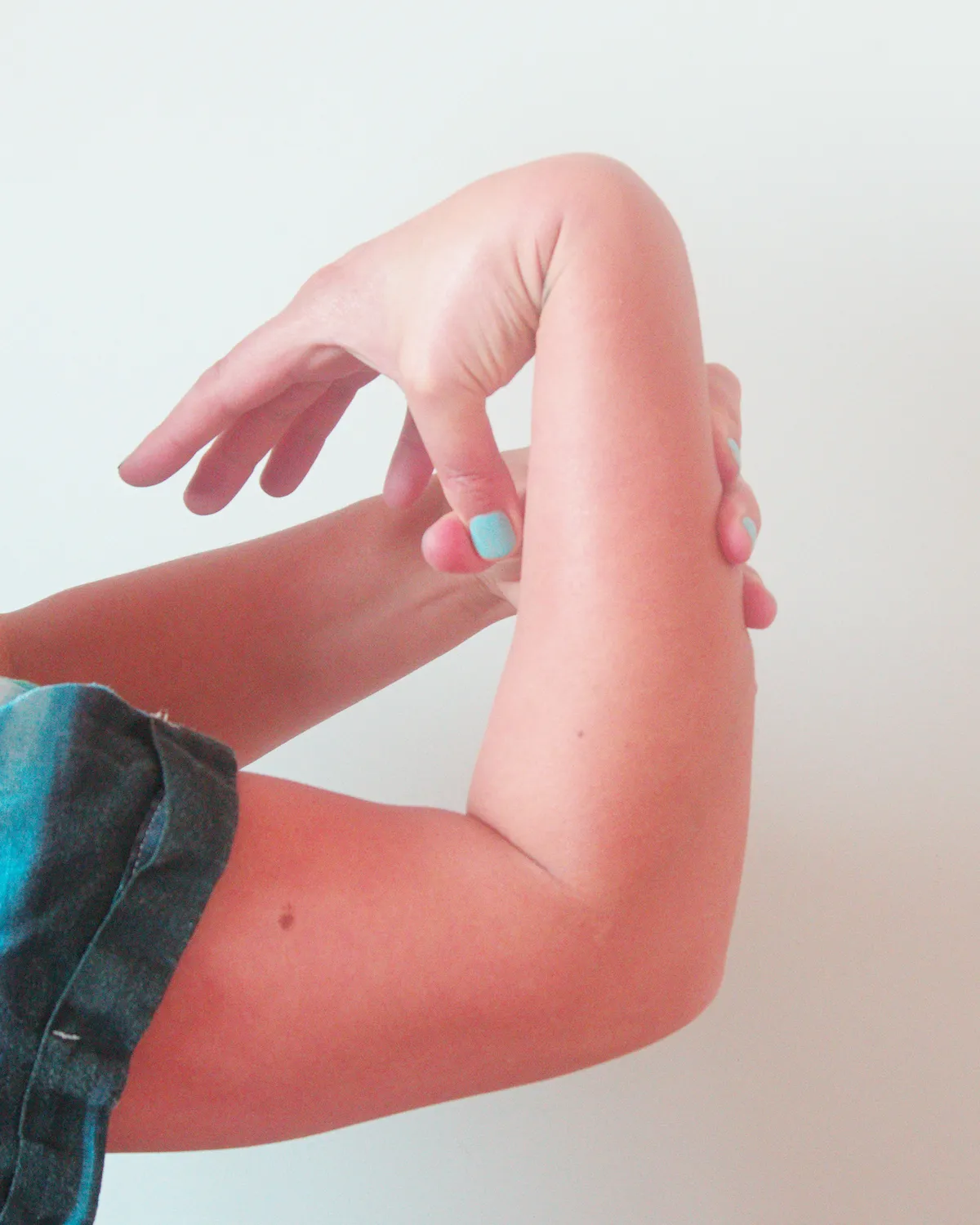
Hypermobility disorders such as hEDS and HSD affect collagen in connective tissue, which can lead to joint instability, pain, fatigue and symptoms across many body systems.
This physiotherapy‑led guide explains what these conditions are, how they’re diagnosed, and why understanding them can make movement and daily life feel more manageable.
I live with my own mix of hEDS‑related symptoms including the unpredictable fatigue & joints that feel fine one day and wobbly the next. I haven’t “fixed” everything, and I still have to pace, adjust and rethink things regularly. But that lived experience shapes the way I work: it helps me create movement options that feel safe, realistic and genuinely doable for people whose bodies don’t always behave by the textbook.

Disclaimer: This information is for general education only & isn’t a substitute for personalised medical advice, assessment or diagnosis. Symptoms like pain, fatigue & instability can have many possible causes, so it’s important to discuss any new, changing or concerning symptoms with a qualified healthcare professional.
Hypermobility disorders are conditions where the connective tissue in the body behaves differently, often because of changes in collagen. The two main diagnoses you’ll hear about are hypermobile Ehlers‑Danlos syndrome (hEDS) and hypermobility spectrum disorder (HSD), while the NHS refers to ‘joint hypermobility syndrome’. All involve joint hypermobility, but they can also affect pain, fatigue, proprioception and how different body systems function.
In a national UK survey completed in 2026, people with hEDS and HSD described “multi‑system symptoms that significantly affect daily life, mobility and wellbeing,” with many reporting long delays before anyone recognised the pattern.
Hypermobility disorders are not just about being flexible or “double‑jointed”. Lots of people are naturally flexible without having a connective tissue disorder. hEDS and HSD are about symptomatic hypermobility -where joint laxity is accompanied by pain, fatigue, instability, injuries or systemic symptoms that interfere with daily life.
If fatigue is one the symptoms that impacts you the most, you may find my guide exploring how to manage fatigue with hypermobility useful to read. If pain affect you and impacts your mobility and movement, I’ve also written about chronic pain and movement avoidance which may have some useful tips.
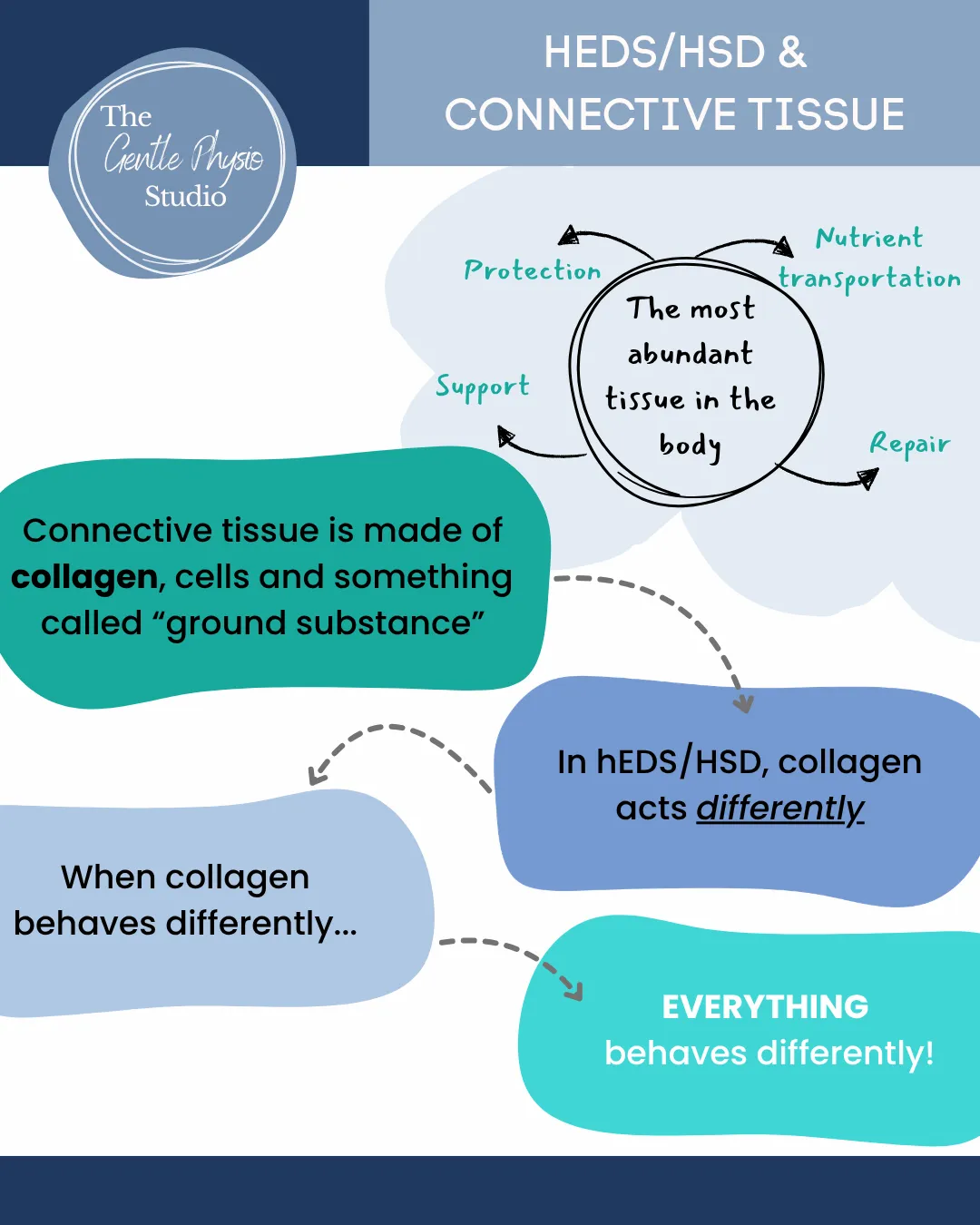
Connective tissue is the scaffolding of the body. It’s found in ligaments, tendons, fascia, skin, blood vessels, organs and around the nervous system. One of its key ingredients is collagen, a protein that gives tissues strength and structure. When collagen behaves differently, the tissues it supports behave differently too.
In hEDS and HSD, collagen is thought to be more elastic and less able to recoil, which means joints can move further and feel less supported. People often describe their joints as loose, wobbly or unstable. This can lead to subluxations, dislocations, soft‑tissue injuries and muscle fatigue as the body works harder to keep everything in place.
Because connective tissue is everywhere, symptoms don’t just show up in the joints. They can also affect:
A 2024 global survey described hEDS and HSD as “chronic, complex conditions with lifelong, multisystem comorbidities and significant unmet needs in care and recognition.”
If your symptoms sometimes feel unmanageable or you’ve found yourself avoiding certain movement because they feel worrying – my guide on chronic pain and movement avoidance helps explain why this happens and how to rebuild confidence gently.
RELATED ARTICLE → Chronic Pain & Movement Avoidance: How Can I Exercise Safely?
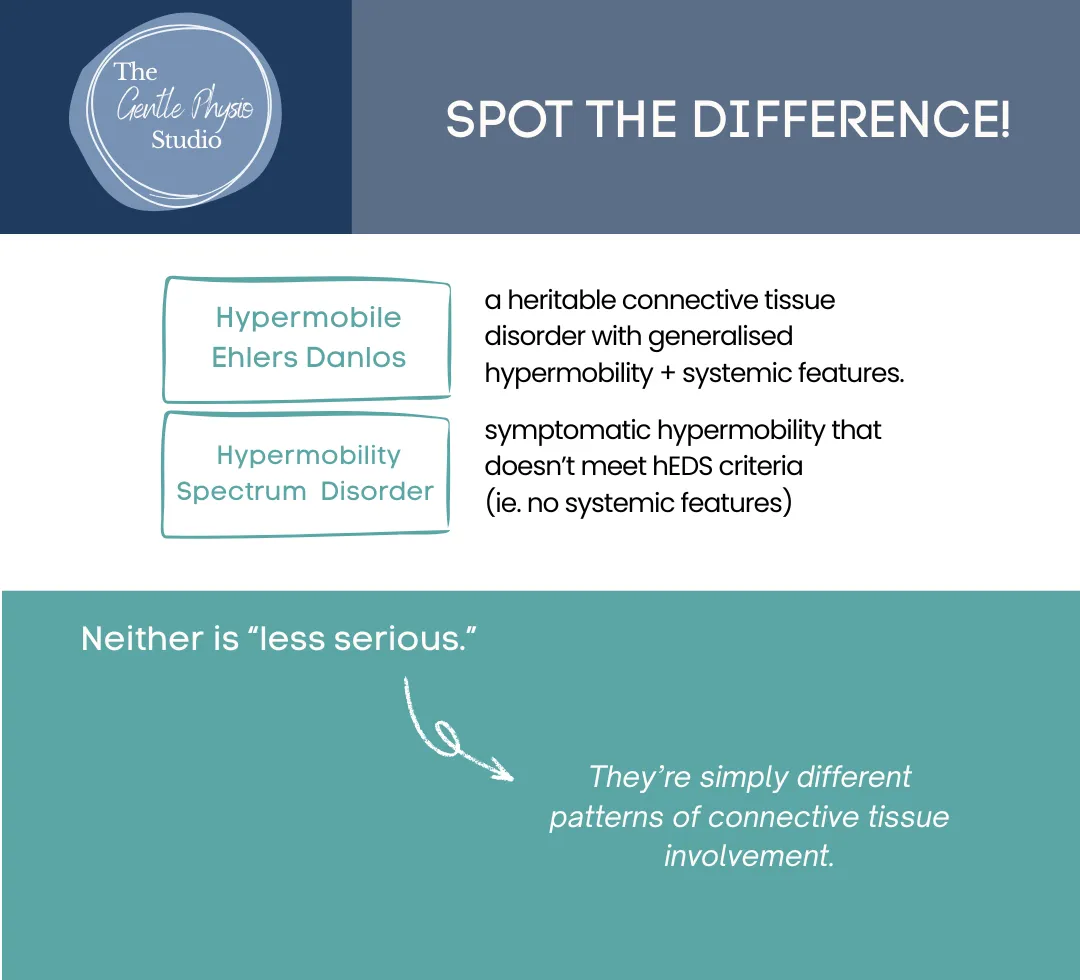
Hypermobile Ehlers‑Danlos syndrome (hEDS) is a heritable connective tissue disorder characterised by:
Hypermobility spectrum disorder (HSD) is diagnosed when someone has symptomatic joint hypermobility, which cannot be explained by other conditions and does not meet the full criteria for hEDS. HSD includes several subtypes (generalised, peripheral, localised and historical HSD), which describe where hypermobility shows up and how it affects the body.
Symptomatic means there is pain or problems with the joints, including dislocations or subluxations. People may also have things like flat feet or unstable ankles.
HSD is not a “milder” or “less serious” version of hEDS. People with HSD can experience significant pain, fatigue, instability and systemic symptoms. The label is more about how the pattern of features fits the current criteria than about how “bad” the condition is.
The nomenclature of these conditions is an evolving field! Research is ongoing, and I suspect that over the next few years there will be significant developments which hopefully make diagnosis and treatment a more straightforward process.
RELATED ARTICLE → Hypermobility & Fatigue after Exercise: Tips from a Physio
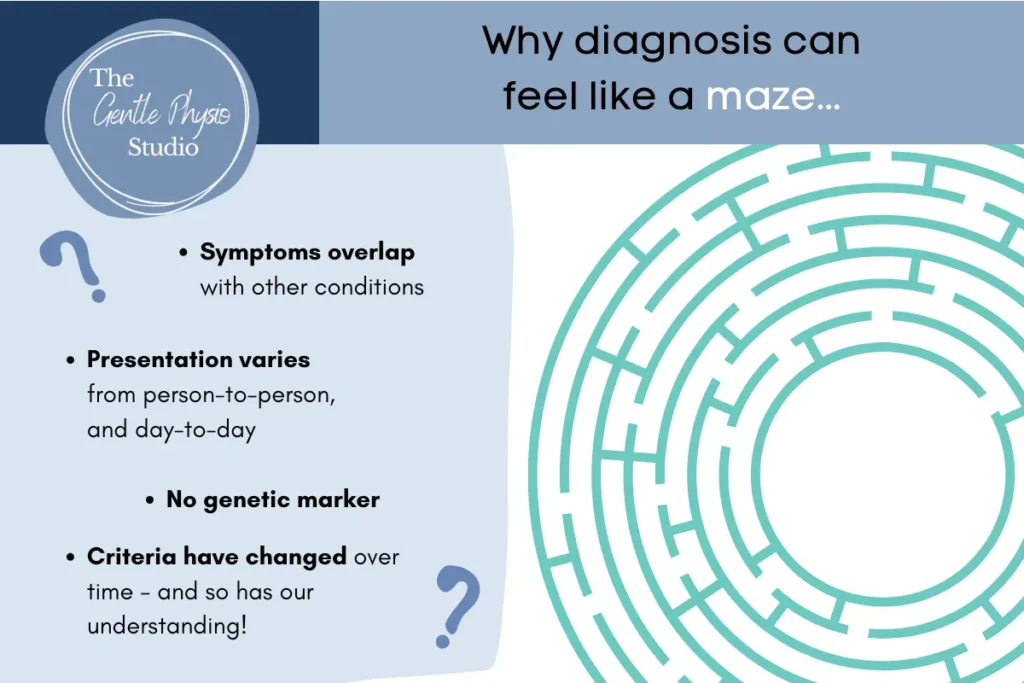
Because there is no genetic test for hEDS yet, and because symptoms overlap with many other conditions, people often experience long delays.The MDPI 2024 survey found that more than half of respondents waited over 10 years for a diagnosis, and many saw multiple specialists before anyone recognised the pattern.
In the UK, diagnosis can be made by doctors with experience with heritable connective disorders, who feels confident ruling out alternative diagnoses. These can be rheumatologists, geneticists or experienced physicians. However, NHS trusts in different locations have different amounts of expertise and resource which means not all rheumatologists or GPs will be able to diagnose.
If you suspect you may have hEDS or HSD, it can be helpful to keep a symptom diary, note patterns of injuries and fatigue, and bring reputable information (NHS, HMSA, EDS Society) to your appointment.
Diagnosis of hEDS and HSD is clinical, which means it relies on:
RELATED ARTICLE → Chronic Pain & Movement Avoidance: How Can I Exercise Safely?
Physiotherapy for hypermobility disorders isn’t about generic exercise sheets or “strengthen your core and you’ll be fine.” It’s about understanding how your connective tissue behaves, how your symptoms fluctuate, and how your body responds to load, fatigue and movement.
A specialist physio looks at the whole picture – joint stability, proprioception, fatigue patterns, autonomic symptoms, pain behaviour and your day‑to‑day function – and builds a plan that feels safe, predictable and achievable.
For many people with hEDS or HSD, the biggest barriers to exercise are fear of flares, fear of injury and not knowing where to start. That’s where physiotherapy becomes especially helpful. We begin with movements that feel stable and manageable, often in mid‑range positions, and gradually build control before adding resistance or complexity. This reduces the “wobbly” sensations that come from joint laxity and helps your nervous system feel safer during movement.
If you’re beginning to explore strengthening but feel unsure how to do it without triggering flare‑ups, my guide on safe strength training for hypermobile people explains how to use stability work and gentle progression to keep things predictable.
Research supports a graded, stability‑first approach. In a 2026 pragmatic clinical trial of an online Pilates programme for people with hypermobility, participants began with high levels of pain, fatigue and fear of movement.
After eight weeks, many reported improvements in function, interoception and kinesiophobia -showing that when exercise is structured, paced and hypermobility‑aware, it can support confidence rather than trigger flare‑ups.
Fatigue is common in hypermobile disorders (HSD/hEDS) – often with pain & flare ups. Learning gentle, sustainable exercise skills can make movement feel more manageable.
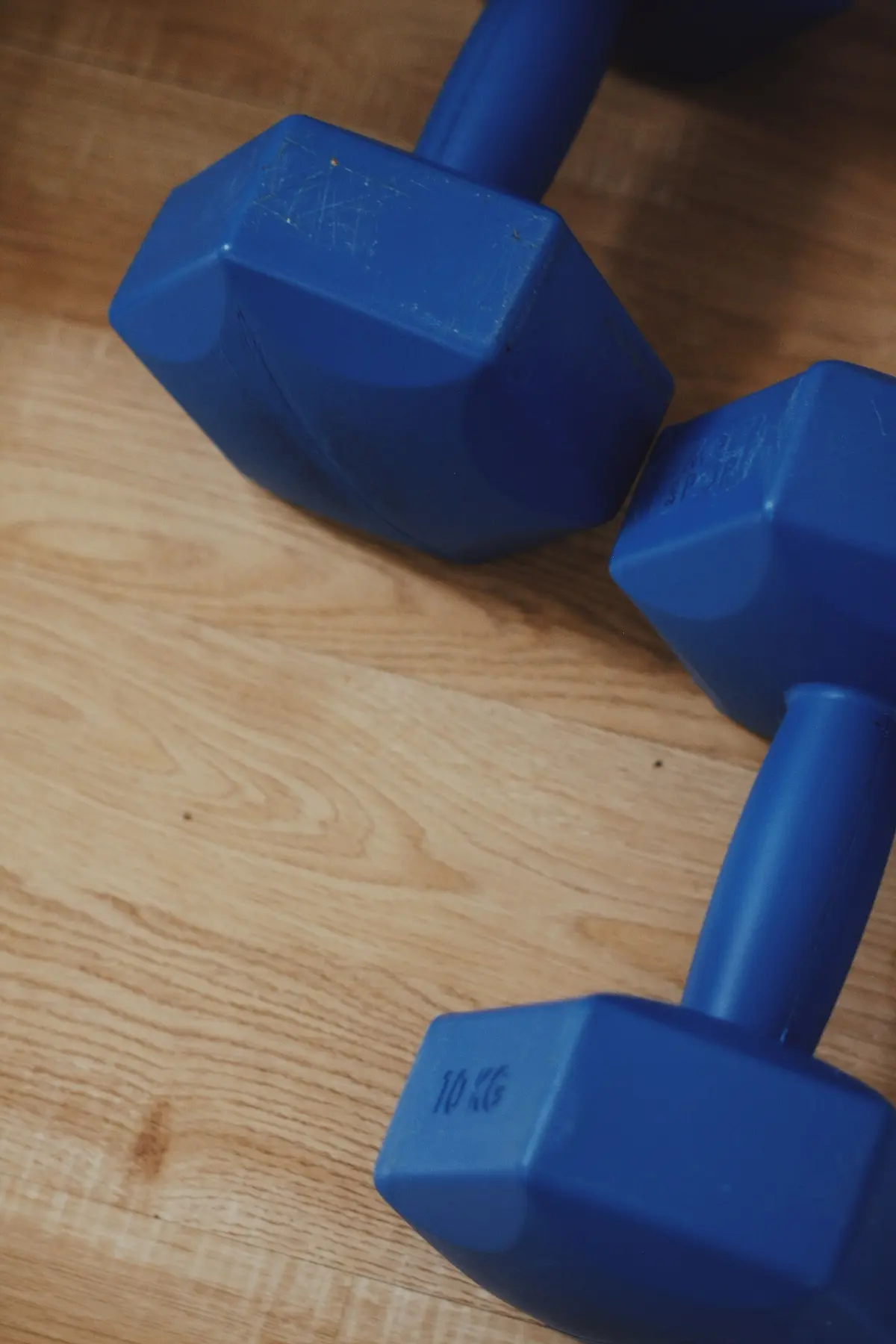
Strength training can feel overwhelming with hEDS or HSD — especially with pain, fatigue or fear of flare ups. This guide shares safe, stabilisation focused physiotherapy ideas to help you build strength confidently, reduce injury risk and stay within your energy envelope.
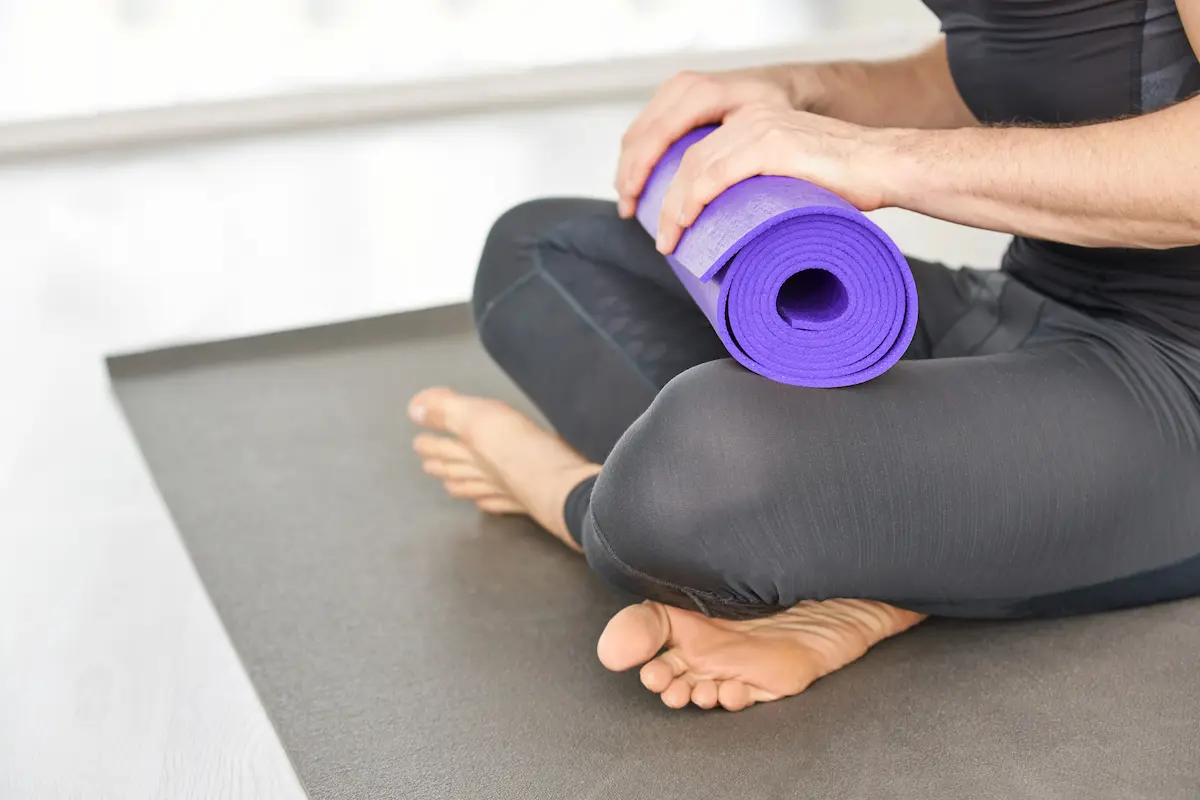
Finding the right exercises with hEDS or HSD can feel overwhelming when pain, fatigue or joint instability get in the way. This guide explores some of the best types of exercise for people with hypermobility disorders — and explains how each one supports stability, confidence and day to day function without overwhelming your energy.
Hollie is a UK Physiotherapist specialising in hypermobility disorders, chronic pain, fatigue, autonomic symptoms and neurodivergence‑informed rehab. She works remotely across the UK, offering calm, paced physiotherapy for people whose symptoms fluctuate day‑to‑day.
Her approach blends clinical training with lived experience of hEDS, chronic pain, fatigue, instability and endometriosis, giving her a deep understanding of boom‑and‑bust cycles, flare‑ups and the fear of making symptoms worse.
Hollie has spent 15 years teaching movement (Clinical Pilates, Therapeutic Yoga, Shaw Method swimming and Aquatic Therapy), helping people rebuild confidence in movement.
You can learn more about her background and clinical approach on the About Me page.

If this guide resonated with you, you might like to find out more about how I support people with chronic pain, fatigue and hypermobility here are some useful next steps:
If you are ready to get started, you can book a remote initial assessment with me – a 45 minute session designed to understand your symptoms, your goals, and how we can get there.
Introductory offer: £26 £45
If you’d like to get a sense of who I am and how I work, you can read more about my background, my approach, and the values that shape every session. I support people with chronic pain, fatigue and hypermobility using a calm, paced, and collaborative style – so you always know what to expect.
If you’d like to see what this work can look like in real life, you can read the stories of people I’ve supported. I’m incredibly proud of what they’ve achieved, not because of big dramatic changes, but because of the steady, brave steps they’ve taken in their own bodies.